
by Mayukh Ghosh
In the small world of cricket publishing, the name Fairfield Books has been synonymous with exemplary quality. Stephen Chalke had built that over many years and when he retired and handed it over to the team behind The Nightwatchman and Wisden Cricket Monthly, there were people who had their doubts. I was one of them.
Happily, those doubts were entirely unfounded. Not only they produced some fine books, but they also encouraged the so-called offbeat ideas.
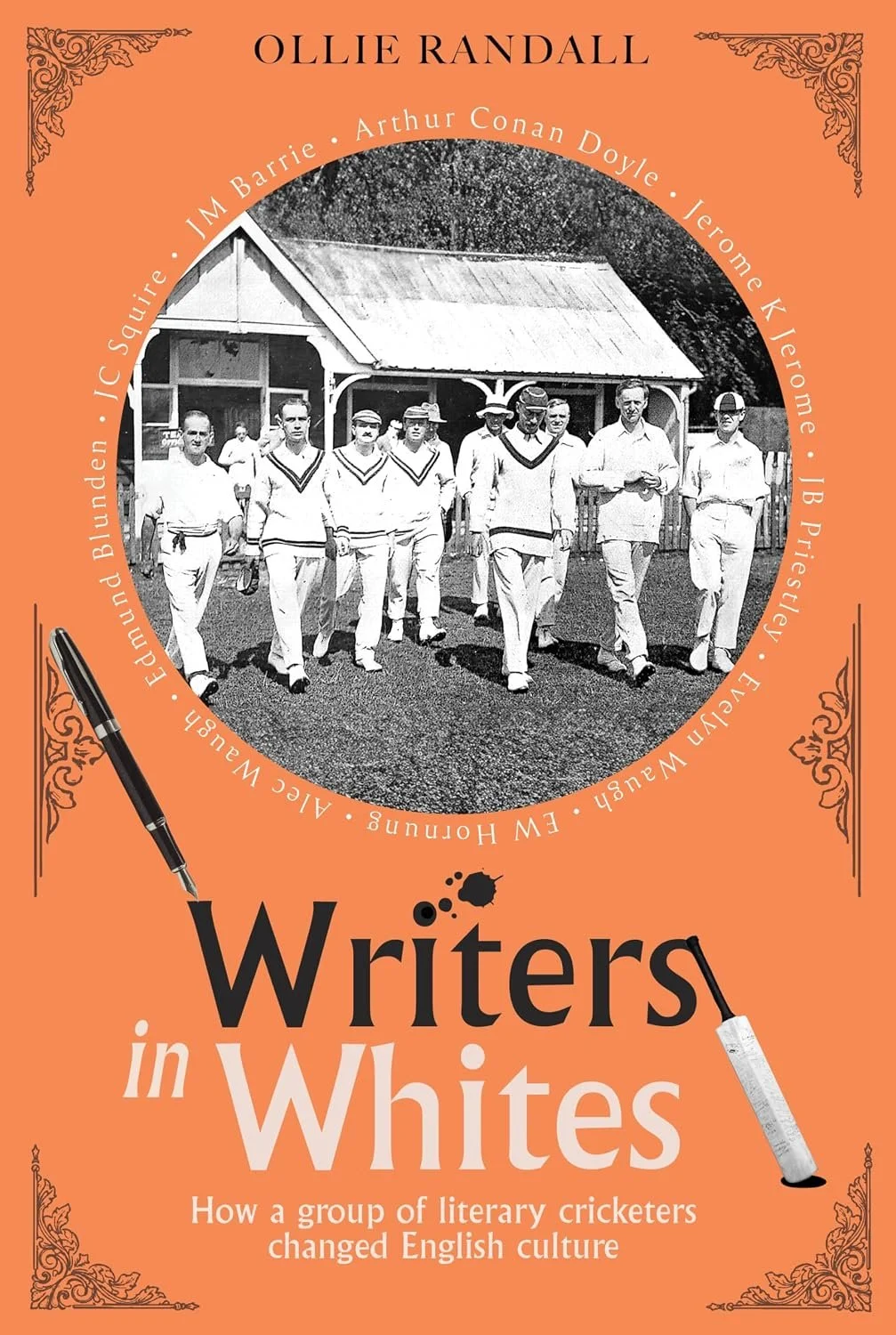
A great example of that is this book by Ollie Randall.
Randall is not from the inner circles and chose to write a book that didn’t concern The Ashes, Ian Botham, Ben Stokes,….
“When I was young, it seemed as though Test matches were constantly on Channel 4 in the background, and I absorbed the sport by osmosis. My favourite player was Dominic Cork, after I watched him win a match with some lower-order batting heroics – I wish I knew which match it was*. My dad has no interest whatsoever, but my mum and her father inculcated me and my sister with a fascination for the game. Like many others of my age, my childhood experience of cricket was shaped by the summer of 2005: the drama of that immortal Ashes series, followed by the brutal loss of terrestrial cricket coverage. We never had Sky Sports in our house. My sister and I played countless rounds of Ashes 2005 Top Trumps – it was our favourite game. To make up the numbers for thirty cards, the designers included commentators as well as the players, which was my first glimpse into cricket history: I pored over the Top Trumps stats of legends such as Richie Benaud, who actually features in the last chapter of Writers in Whites.”
Writers in Whites was not an idea he had forever and things happened more by chance than design.
“After a history undergrad degree and a creative writing master’s degree, I worked freelance as, among other things, a historical researcher. In April 2020, when the pandemic abruptly cut off most of my income, I sent a rather plaintive email to my small handful of contacts, asking if they had any work that I could do. One of them, Charlie Campbell, replied to say that he's the founder and captain of the twenty-first century Authors Cricket Club, and perhaps I could do a couple of weeks' work on the Authors XI which played from the 1890s until 1912 and which was the inspiration for his team. After only a few days of digging, I realised that there was a much larger and more significant story here, which nobody had ever written about before.
“Firstly, there was a sequence of literary cricket teams from the 1880s to the 1960s, with overlapping memberships right the way through, providing a single long line of continuity. Secondly, there was no reference anywhere to this fact. Thirdly, there was a link to be drawn between the existence of this network, and the sorts of things that these literary cricketers were writing - a link that could tell us a great deal both about various famous writers, and also about the culture that they were helping to shape. This became the basis for my PhD, which I carried out between 2022 and February 2026, unearthing this forgotten story.”
The PhD thesis became the backbone of the book.
But it is not as straightforward as it might seem. It is often tricky to get the right tone while using thesis material for a commercial book.
“There's a lot of overlap with the PhD – I simply cut out all of the historiographical bits and put in all the colour and fun anecdotes that I couldn't justify including in the thesis. For example, in the book, I can paint more of a picture of the personalities like J.M. Barrie, and I can include entertaining stories for their own sake – such as a full-length cricket story by the young Evelyn Waugh. Overall, there's a great deal of the same material, but reworked: the book is telling a story, not making an argument.
The tone came quite naturally. I must have been subconsciously writing the book throughout my PhD, because when I began the manuscript, I found I already knew how I wanted to do it, and the words mostly just flowed. Fairfield has trusted me to do it my way, which has been a very generous vote of confidence from them. The result is definitely not academic in style, but it's still closely underpinned by the thesis research.”
Another aspect that could have been an issue was getting the balance wrong between the literary and the cricketing aspects. Finding the sweet spot with the optimum intersection was tricky.
“I think I had to begin with the assumption that any readers would at least be open to being interested in both the cricket and literary aspects. I tried not to overwhelm anyone who was less familiar with one of these areas – the book has no scorecards, for instance, and minimal reference to debates among literary academics. But ultimately, I trusted that the story I was telling is inherently very interesting; I've found it fascinating, and I hope others will too.
”So, I didn't dumb it down, I told the story as I felt it deserves to be told, and I aimed to take the reader along with me, from whatever angle they're approaching it. I also prioritised my characters' own words: for instance, a very funny cricket story by an undergraduate Evelyn Waugh. In this way, I let them tell their own anecdotes rather than getting in the way. And I don't think I lost anything from this approach. The scorecards and the historiography both would have distracted from the human story of these writers laughing and dreaming together.”
Another challenging aspect with a project like this are the sources. Either it is too little about many important areas or sometimes too much about less important areas. Randall found his best source in the United States!
“I mainly drew on a mix of memoirs, newspaper articles and private letters – it took me a good two or three years to trawl really thoroughly through the evidence. It was worth it: I found lots of fresh material as a result. I was less completionist when it came to the literary cricketers' other writings: one of their hallmarks was how prolific they were, often writing forty, fifty, eighty, a hundred books each. But I read as many as was feasible.
”My research took me to quite a few places – most memorably, I spent a month in Austin, Texas, trawling through the Harry Ransom Center collections, where I found lots of my best material. People are often surprised when I say that the most useful archive for Writers in Whites was in Texas, but a huge amount of literary material has ended up there.”
Unexpected discoveries are never far away in such projects and Randall had a few of them.
“The two discoveries that stand out to me are George Ives and the highbrows. Ives was a very early gay rights campaigner - and I didn't expect to discover the fascinating way he incorporated cricket into his idiosyncratic queer ideology. And it was very eye-opening to see what the highbrows - the likes of Virginia Woolf - were saying about the literary cricketers. I was struck by how often literary cricket was directly referred to by the players' highbrow literary rivals; and my attempt to explain this became one of the most consequential parts of my research.”
It is an unconventional project which had its fair share of challenges but the author was happy with the outcome.
“I think, in this case, that the thesis served as a first draft - so all my regrets and second thoughts happened before the book went to the publisher! I might feel differently in six months' time, but right now I'm content with how it turned out. The big question in the last few months was whether I'd get all the permissions I wanted for images and quotations, and I did get virtually all of them, so luckily the book has ended up just the way I wanted it.”
And, finally, kudos to Fairfield Books for publishing this. Here’s what Randall had to say about how it all happened:
“ Essentially, one or two people at Fairfield were aware of my PhD work because they have links to the Authors Cricket Club. Several members of the Authors have shown interest in my research, because they revived the literary cricket tradition that I've been researching. I then got talking to Fairfield about a second, more or less unrelated, project about Indian cricket history. And the upshot of those discussions was that we landed on two books, one on each project. It was an amazing stroke of luck, with everything aligning at the right moment.”
The book is available from the publisher here https://fairfieldbooks.co.uk/shop/writers-in-whites/ and from all usual online and offline outlets.